

Alright, when you’re staring at a sink full of murky water that refuses to go anywhere, don’t panic. The first thing you should always try is pouring a full kettle of boiling water straight down the plughole. You’d be surprised how often this simple trick works, especially for kitchen sinks where grease and soap scum are the usual suspects.
For a bit more oomph, chase that hot water with a cup of bicarb soda. Let it sit for a minute, then pour in a cup of white vinegar. You’ll get a satisfying fizzing reaction that can help break down more stubborn gunk. It’s a classic for a reason.
Your First Moves for a Blocked Sink
More often than not, a blocked sink is just a build-up of everyday stuff. Before you even think about grabbing heavy-duty tools or chemical drain cleaners, a few household remedies can often get things moving again. These initial steps are all about tackling the common culprits quickly and easily.
Dealing with blocked sinks is a classic plumbing headache for Aussie households. It’s no surprise that food scraps, grease, and hair build-ups lead to a huge number of plumber call-outs in states like Victoria. You can find more stats on Australian plumbing industry trends at IBISWorld.
Figure Out What You’re Dealing With
First, play detective. A quick look and sniff can tell you a lot about what’s causing the drama down in your pipes.
Here’s a quick way to tell what the problem likely is before you get your hands dirty.
| Type of Blockage | Common Cause | Best First Action |
|---|---|---|
| Kitchen Sink | Grease, oil, food scraps | Boiling water, bicarb & vinegar |
| Bathroom Sink | Hair, soap scum | Manual removal (plunger/hook), boiling water |
| Both | Small object dropped down | Check the U-bend first |
Knowing the cause helps you pick the right weapon for the job.
Kitchen vs. Bathroom Sinks
- In the Kitchen: If you’re seeing a greasy film and tiny food particles floating around, you’re almost certainly dealing with a clog made of fats and food bits. The water will probably drain at a snail’s pace and might give off a nasty, sour smell.
- In the Bathroom: Is the water backing up with soap suds every time you wash your hands? That’s a tell-tale sign of a hair and soap scum combo. Over time, this mixture creates a dense, sticky plug that’s tough for water to get past.
Expert Tip: A slow drain is your first warning shot. Don’t ignore it. Hitting it with a simple hot water flush right away can stop a minor issue from turning into a complete blockage that ruins your day.
Basically, boiling water is brilliant against grease but won’t do much against a solid clump of hair. A quick diagnosis saves you time and makes sure you start with the method most likely to work.
Your Go-To Toolkit for Stubborn Sink Clogs
So, the boiling water and bicarb soda trick didn’t cut it. Don’t worry, it happens. When you’re dealing with a more serious blockage, it’s time to step up your game. Having a few specific tools ready can save you a lot of grief and the cost of an emergency call-out. You don’t need a plumber’s van worth of gear, just the right stuff for the job.
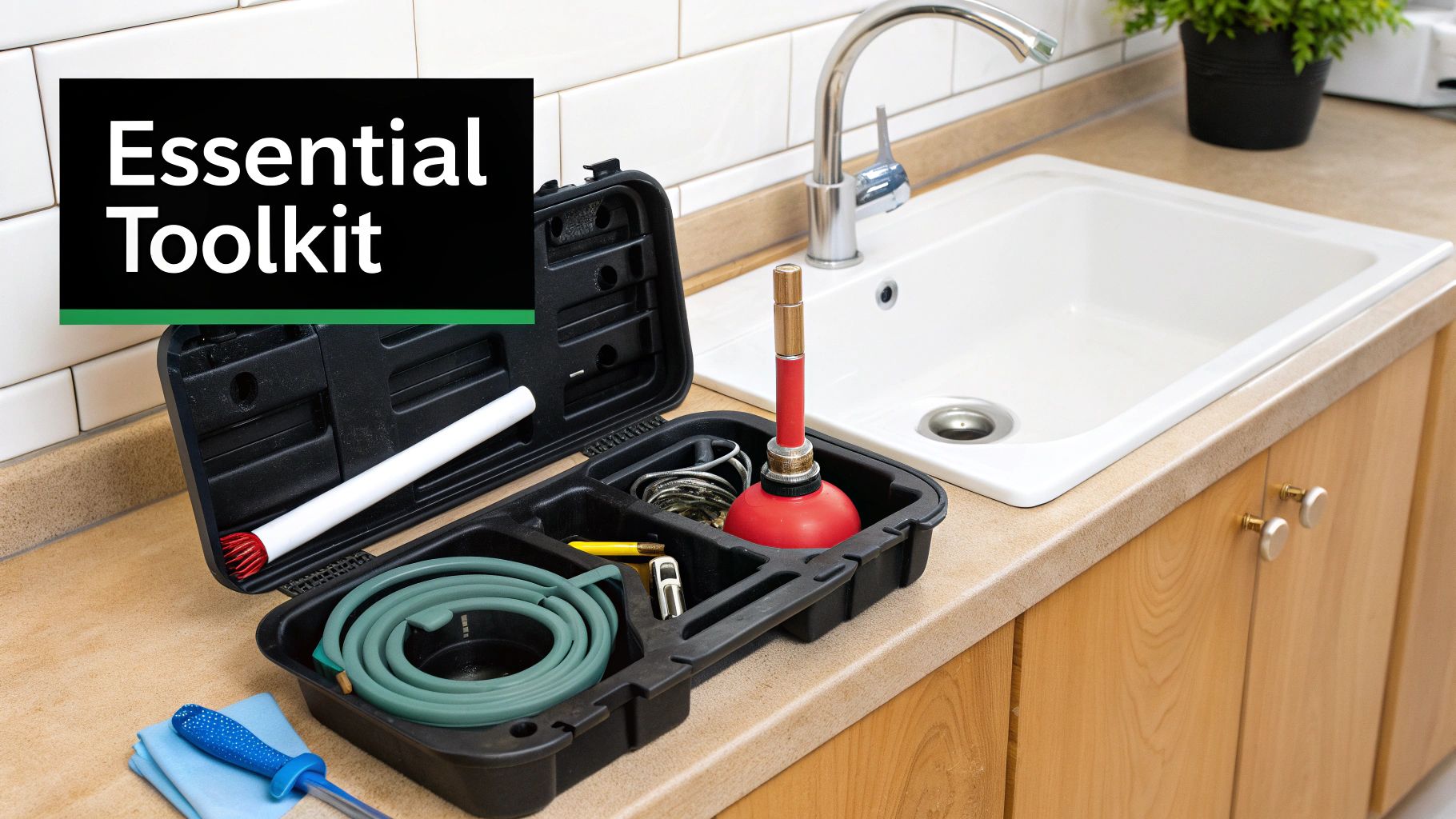
First up is a good cup plunger. And I mean the right kind. People often grab any old plunger, but for a sink, you need the flat-bottomed cup style. This design creates a perfect seal over the plughole, giving you the powerful vacuum you need to dislodge gunk. Using a toilet plunger (the one with the extra flap) on a sink is a common mistake—it just won’t seal properly and you’ll end up splashing water everywhere without moving the clog.
Getting to Grips With a Plumber’s Snake
For those really deep, stubborn clogs that a plunger can’t even touch, a plumber’s snake (or drain auger) is an absolute lifesaver. This long, flexible tool is brilliant because it can weave its way through the curves of your pipes to get right to the source of the problem.
Using it is pretty straightforward. You gently feed the coiled end down the drain—don’t just shove it in. As you crank the handle, it will work its way deeper into the plumbing.
- Hit a roadblock? When the snake stops moving, that’s almost certainly your clog.
- Twist and break: Start turning the handle clockwise. This motion helps the auger’s corkscrew head to either chew through the blockage or snag onto it.
- Pull it all out: Carefully retract the snake. With a bit of luck, you’ll pull the whole mess of hair and sludge out with it.
A plumber’s snake is especially handy for bathroom sinks. That combination of hair and soap scum forms incredibly dense clogs that sit deep in the pipe, and this tool physically pulls the problem right out.
If you’ve given these tools a solid go and that water is still going nowhere, the blockage might be more serious or located much further down the pipeline. At this point, it’s best to avoid causing more issues and bring in a professional. They have advanced equipment to find the problem without any guesswork. Learning about professional CCTV drain inspections is a great way to understand how experts can pinpoint the exact location and nature of a hidden blockage, ensuring it gets fixed properly the first time.
Choosing Natural vs Chemical Solutions
When the trusty plunger just isn’t cutting it, you’re at a crossroads: do you go for a gentle, natural remedy or bring in the heavy-duty chemical cleaners? What’s right for your sink really comes down to the stubbornness of the clog, the type of pipes you have, and what you’re comfortable handling.
Surprisingly often, a simple kitchen staple does the trick. The classic bicarbonate of soda and vinegar combo works by creating a fizzing reaction that expands and gently scours the inside of your pipes. It’s fantastic for breaking down minor build-ups of grease, soap scum, and small food scraps. Best of all, it’s a completely safe, non-toxic approach that won’t damage your plumbing or the environment.
The Bicarb and Vinegar Trick
Getting this right is easy. Just pour about half a cup of bicarb soda straight down the plughole, and chase it with the same amount of white vinegar. You’ll hear it start fizzing and bubbling immediately – that’s the reaction getting to work.
Leave it to do its thing for at least 20 minutes, then flush everything through with a full kettle of boiling water. It’s a simple, effective first step when you’re figuring out how to unblock a sink.
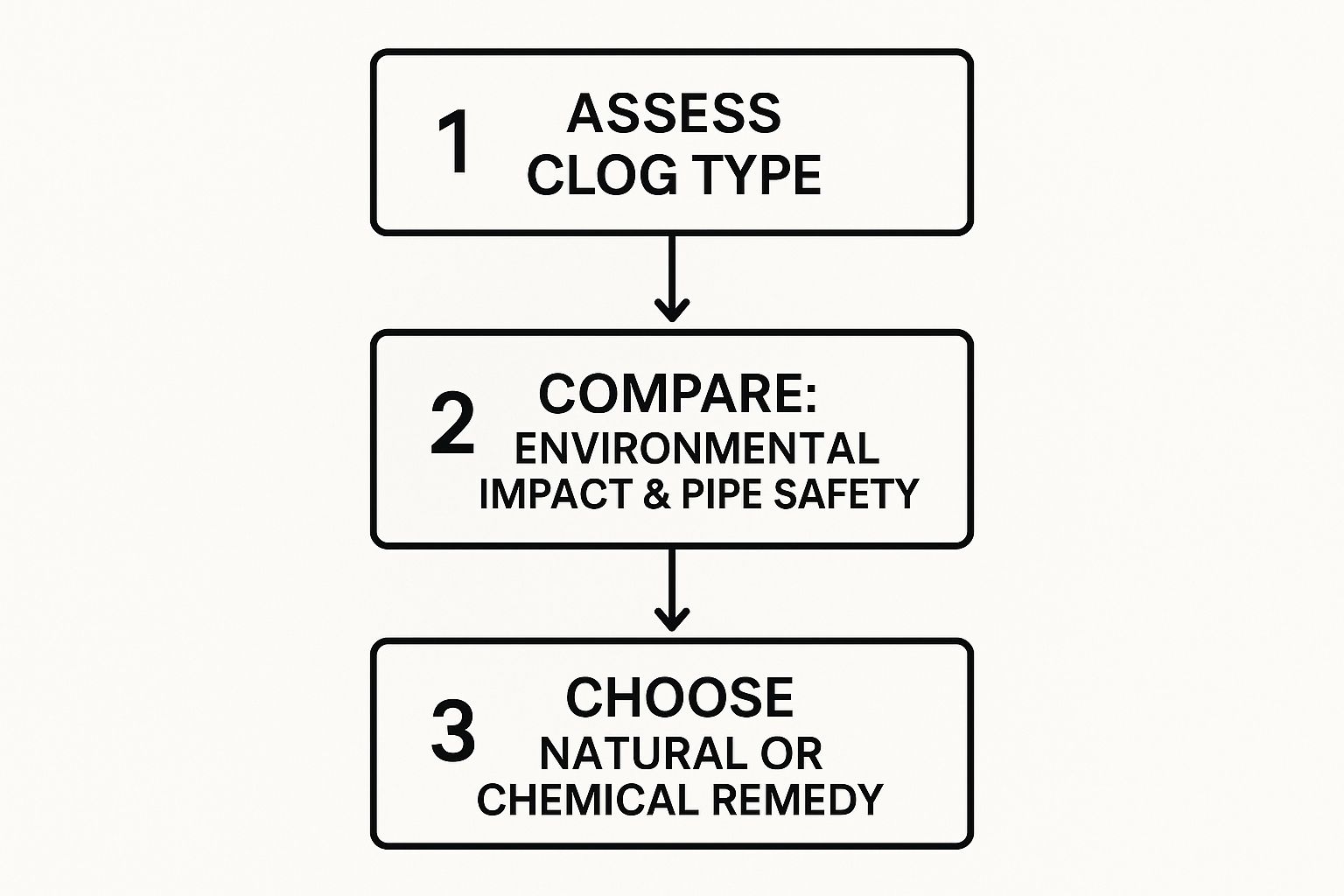
This guide helps you pause and think, first about what’s likely causing the blockage and then about the pros and cons of each solution before you dive in.
When Chemical Cleaners Might Be Necessary
Commercial drain cleaners, on the other hand, are all about brute force. They use powerful alkaline or acidic formulas designed to dissolve really tough clogs, like a dense knot of hair or grease that’s turned solid. They can be incredibly effective, but they don’t come without risks.
Before reaching for a chemical cleaner, it’s worth weighing up your options. Each approach has its place, but they are far from equal in terms of safety and impact.
DIY vs Chemical Drain Cleaners
| Method | Pros | Cons | Best For |
|---|---|---|---|
| Bicarb Soda & Vinegar | Safe for all pipes, eco-friendly, cheap, readily available. | Slower acting, may not work on severe or deep clogs. | Minor clogs from grease, soap, and food build-up. Regular maintenance. |
| Chemical Cleaners | Very fast and powerful, dissolves tough organic matter like hair. | Can damage older pipes (especially PVC), harmful fumes, toxic to skin/eyes. | Stubborn, severe blockages in newer, sturdy plumbing systems. |
Ultimately, while chemicals can offer a quick fix, the potential for pipe damage and the safety risks mean they should be used with extreme caution and only when necessary.
Crucial Safety Warning: The intense heat generated by chemical cleaners can seriously damage older plastic or metal pipes. Never, ever mix different chemical products—this can release dangerous toxic gases. Always wear protective gloves and make sure the room has plenty of ventilation.
If you decide a chemical cleaner is your only option, follow the instructions on the bottle to the letter. Use the exact amount recommended and let it sit for the specified time before flushing. Think of them as a last resort, not a regular fix, as repeated use can eat away at pipe seals over time.
Tackling the P-Trap
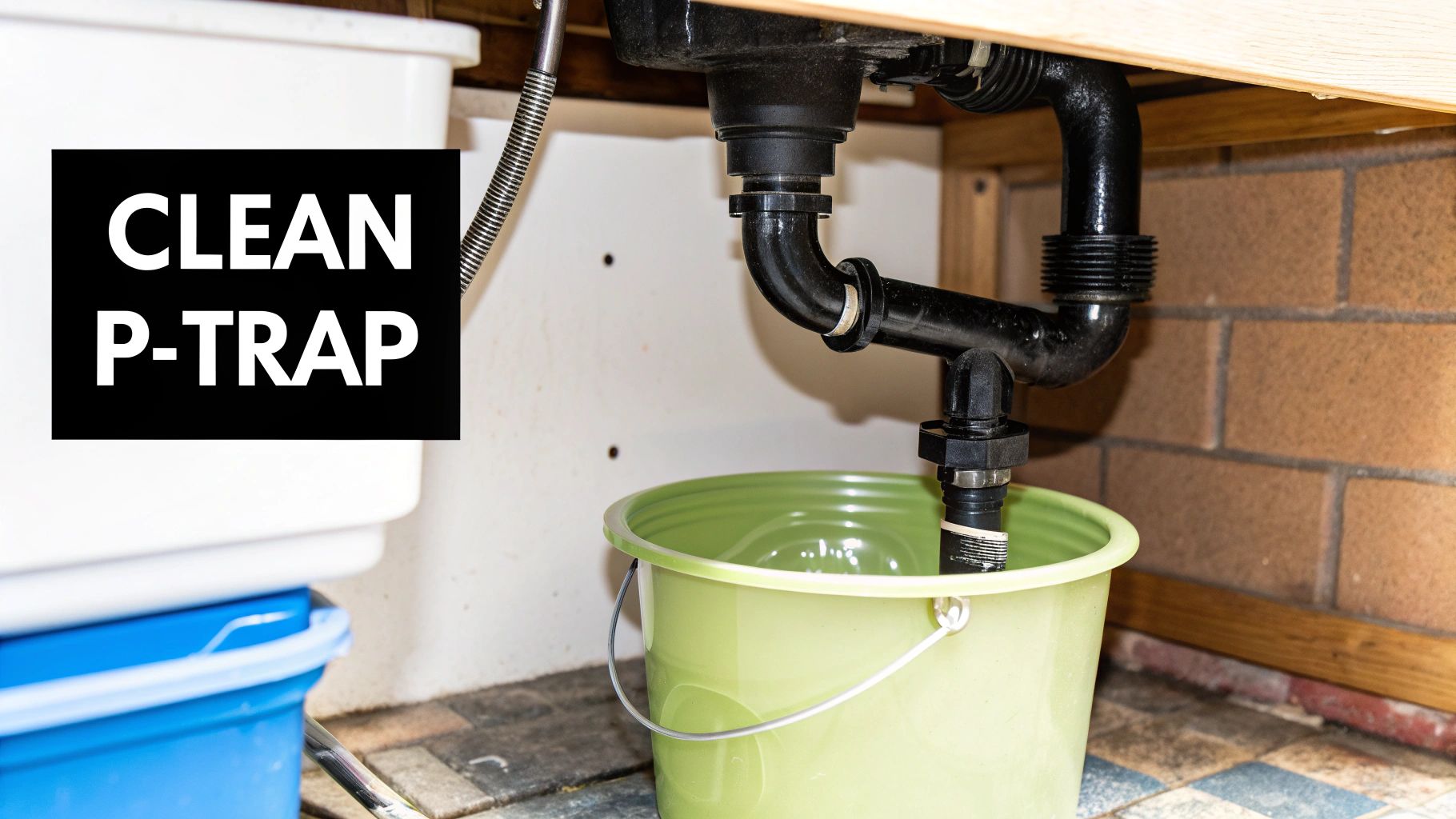
If the plunger and your home-brew remedies haven’t done the trick, the culprit is almost certainly hiding in the U-shaped pipe under your sink. This is called the P-trap. Its job is to hold a little bit of water to keep nasty sewer gases from coming up the drain, but that curve is also a magnet for hair, grease, and anything else that accidentally goes down the sink.
Clearing it out yourself is a surprisingly simple fix for some of the most stubborn blockages. The most important thing is to be ready for a bit of mess. Grab a bucket or a deep tray and place it right under the bend to catch the water and sludge that’s about to come out.
Dismantling and Clearing the Trap
With your bucket in place, you can get started. Look for the large plastic nuts on either side of the U-bend—these are called slip nuts. Most modern ones are designed to be undone by hand.
Give them a firm twist anti-clockwise. If they’re a bit stiff from age or gunk, a pair of channel-lock pliers will give you the extra leverage you need. Once they’re loose, you can gently pull the U-shaped section away from the other pipes. Expect the trapped water and debris to drain straight into your bucket.
- Take a Look Inside: Once the trap is off, you’ll probably see what’s been causing all the trouble. It’s often a solid, pretty gross-looking clump of stuff.
- Get the Gunk Out: An old bottle brush works wonders here. A bent wire coat hanger or even your fingers (wear gloves!) can also be used to pull out all the debris.
- Give It a Good Rinse: Take the P-trap to another sink or use a hose outside to wash it out with hot water until it’s completely clear.
Here’s a pro tip: Before you put it all back together, poke around inside the pipe that goes into the wall. Sometimes the clog is just a little further along, and a quick check now can save you from doing this all over again.
Putting It All Back Together
Reassembly is just as straightforward. Pop the clean P-trap back into position, making sure any seals or washers are seated correctly. Hand-tighten the slip nuts until they feel snug. You don’t need to go overboard here—overtightening can crack the plastic.
Once it’s all connected, turn on the hot tap for about a minute. This will refill the trap and, more importantly, let you check for any drips or leaks around the nuts you just tightened.
Knowing When to Call a Plumber
There’s a real sense of satisfaction in clearing a blocked sink yourself. But sometimes, you have to know when to throw in the towel. If you’ve given it a good go with the plunger and even cleaned out the P-trap, but that water still isn’t going anywhere, that’s a pretty big red flag.
Another tell-tale sign is a recurring clog. If you feel like you’re unblocking the same sink every few weeks, the real problem probably isn’t in the trap at all—it’s likely much further down the line.
Pushing on with these persistent issues is a bad idea. You risk causing much bigger headaches, like damaged pipes or even a hidden water leak inside your walls. A professional plumber has the gear to find the root cause, not just put a band-aid on the symptom.
Signs of a Deeper Plumbing Problem
That one blocked sink might just be the tip of the iceberg. If you spot any of the following signs, it’s time to step away from the tools and get an expert on the phone immediately. These are classic symptoms of a major blockage in your main sewer line.
- Multiple Drains Acting Up: Does your shower gurgle every time you run the kitchen tap? Maybe flushing the toilet makes water bubble up in the bathtub? When multiple fixtures start acting strangely at once, it’s a huge clue your main sewer line is obstructed.
- A Foul Smell That Won’t Quit: A constant sewer odour hanging around is more than just unpleasant. It points to trapped waste and gas building up somewhere in your main line, which is a problem that won’t fix itself.
- Mysterious Puddles Outside: If you notice soggy patches or pools of water in your garden—especially near where your pipes run—it could mean you’ve got a broken or blocked sewer pipe underground.
Trying to tackle a main sewer line blockage with DIY tools is a recipe for disaster. It’s not just ineffective; you could end up causing serious and expensive damage to your home’s plumbing.
The Professional Advantage
Here in Australia, calling in a licensed plumber is the standard for a good reason. Research shows that professionals handle around 60% of all plumbing maintenance, and that includes the really tricky sink blockages. They have the experience to get it sorted safely.
For the most stubborn clogs, a good 40% of them need specialised gear like a mechanical auger (or “electric eel”) or even a high-pressure hydro-jetting machine. You just can’t get that at the local hardware shop. You can read more about these plumbing market insights at IMARC Group.
When you’re dealing with a serious clog, a pro can use tools like a CCTV drain camera to get a clear look inside your pipes. This takes all the guesswork out of the equation and means they can find a permanent fix.
For help with recurring or serious drain blockages in Melbourne’s eastern suburbs, getting an expert in is always your safest and most effective bet.
Got a Few More Questions About Unblocking Your Sink?
Even after you’ve cleared a blockage, a few questions might pop into your head. Knowing the answers can help you prevent future clogs and give you the confidence to tackle them when they do happen.
How Do I Use a Plunger on a Double Kitchen Sink?
You absolutely can, but there’s a specific technique to it. If you try to plunge one side without thinking about the other, you’ll just be pushing water back and forth between the two drains.
The trick is to completely seal off the drain you’re not plunging. Grab a wet cloth and stuff it firmly into the other drain opening, or use a proper drain stopper if you have one. This forces all the pressure from the plunger down into the blockage where it belongs. Without that seal, you’re just wasting your effort.
Are Those Chemical Drain Cleaners Safe for My Septic System?
This is a really important one if you’re not on the main sewer line. The short answer is: no, most of them aren’t.
Those powerful chemical drain cleaners work by dissolving everything in their path, and that includes the good bacteria in your septic tank that are essential for breaking down waste. Wiping them out can lead to a system failure and some very expensive repairs down the track.
If you must use a liquid cleaner, look for one that is ‘septic-safe’ and based on enzymes, not harsh chemicals. Honestly though, sticking to physical methods like a plunger or a drain snake is always the safest bet for your septic system’s health.
A quick tip from experience: Your septic system is a living ecosystem. Don’t pour anything down the drain that could upset that delicate balance. When in doubt, go mechanical.
Help! My Bathroom Sink Is Blocked and Really Smells. What’s Going On?
That nasty smell from a blocked bathroom sink is a classic sign of a P-trap full of gunk. Over time, a lovely combination of hair, soap scum, toothpaste, and bacteria builds up in that U-shaped pipe and starts to rot.
First, try pouring a kettle of boiling water down the drain to see if you can melt away some of the greasy soap scum. If that doesn’t fix it, a drain snake is your next best tool. You’ll likely pull up a disgusting clump of hair, which is usually the main culprit behind both the blockage and the smell.
For really stubborn clogs that just won’t budge, or if you want to get your pipes completely clean, professional high-pressure jetting services will scour the inside of the pipes, getting rid of every last bit of debris and odour.
Article created using Outrank


