When you first notice the water isn’t going down, whether it’s in the shower, sink, or basin, that sinking feeling is all too familiar. But don’t panic or immediately reach for a bottle of harsh, drain-clearing chemicals. More often than not, a few simple, first-aid-style tricks are all you need to get things flowing again.
The key is to start with the least aggressive methods first. Most slow drains are just the result of everyday gunk—think soap scum, grease from cooking, or a clump of hair—that hasn’t had a chance to become a rock-solid obstruction just yet. Acting fast with the right approach can stop a minor nuisance from escalating into a major plumbing headache.
The Power of Boiling Water
Your first and easiest weapon is probably sitting on your kitchen counter right now: the kettle. A simple kettle full of boiling water can work wonders, especially on blockages in the kitchen sink.
So much of what goes down our kitchen drains are fats, oils, and grease. As they cool, they solidify inside your pipes, creating a sticky trap for food scraps and other debris. Pouring boiling water directly down the drain can often be enough to melt this greasy buildup, allowing it to be flushed away. This works a treat for bathroom drains too, helping to dissolve soap scum and conditioner residue. For best results, try it two or three times.
A quick word of warning, though: if you know you have PVC pipes, it’s best to skip the boiling water. The extreme heat can sometimes soften the plastic or damage the pipe joints. Hot tap water is a safer bet in that case.
A Natural Fizzing Solution
If hot water alone didn’t solve it, it’s time to bring out the classic duo: baking soda and vinegar. It’s a bit like a primary school science experiment, but this fizzy reaction is surprisingly effective at breaking down grime without harming your plumbing.
Just tip about half a cup of baking soda straight into the drain. Follow it up with the same amount of white vinegar, and get ready for the fizz.
Pro Tip: As soon as you pour the vinegar in, pop the plug in the drain or cover the opening with a damp cloth. This simple trick traps the fizzing action, forcing it to work its way down into the blockage instead of just bubbling up into your sink.
Let it sit and work its magic for at least 15-30 minutes. If you suspect it’s a stubborn clog, leaving it for an hour won’t hurt. Once the time is up, flush everything through with another kettle of hot (not boiling, if you have PVC) water to clear out all the loosened gunk.
This infographic breaks down these initial steps into a simple, easy-to-follow process.
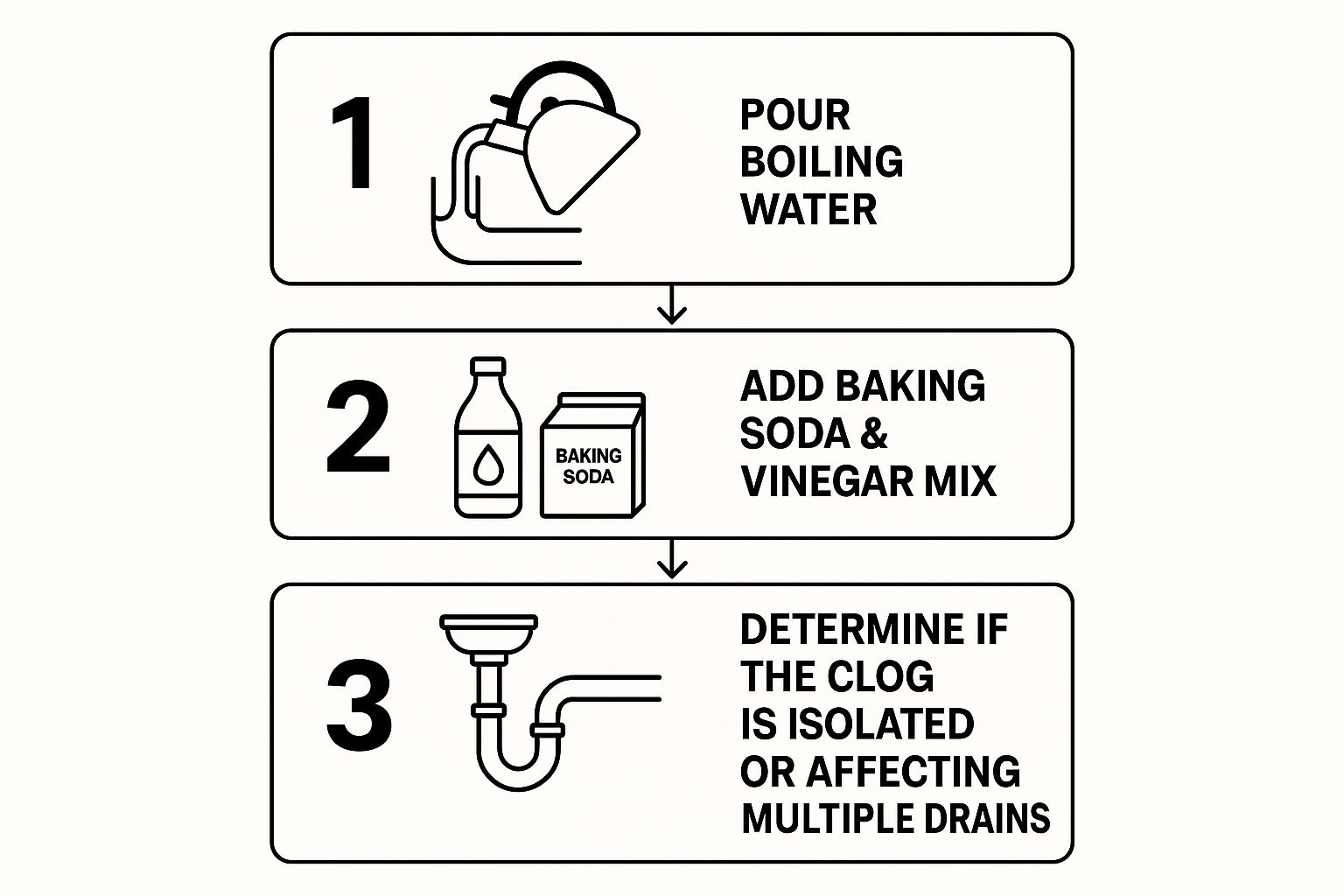
Sometimes, knowing where to start is half the battle. This quick-reference table compares these common DIY methods to help you decide on the best first move for your situation.
Quick DIY Drain Clearing Methods
| Method | Best For | Tools Required | Safety Notes |
|---|---|---|---|
| Boiling Water | Kitchen sinks with grease, oil, and fat buildup. Also effective for soap scum. | Kettle or large pot. | Avoid using on PVC pipes as high heat can damage them. Be careful not to splash yourself. |
| Baking Soda & Vinegar | Minor clogs from hair, soap scum, and light food debris in any drain. | Baking soda, white vinegar, drain plug or cloth. | A safe, non-toxic option. Flush thoroughly with hot water after letting it sit. |
These simple, home-remedy solutions are fantastic for dealing with minor, localised blockages and should always be your first port of call.
Is the Problem Bigger Than One Drain?
After you’ve tried these initial fixes, take a moment to play detective. Is it just the kitchen sink that’s giving you grief, while the shower and bathroom basin are draining just fine? If so, you’re almost certainly dealing with a localised clog in that one drain’s trap or pipe.
But if you notice that multiple drains in your home are slow, gurgling, or backing up all at once, that’s a red flag. This usually points to a much bigger issue further down the line, likely a blockage in your main sewer line. This is definitely not a DIY job. If you suspect a main line clog, it’s time to put the tools down and call a professional plumber. Pushing on with DIY methods could make things a lot worse.
What’s Really Clogging Up Your Drains at Home?
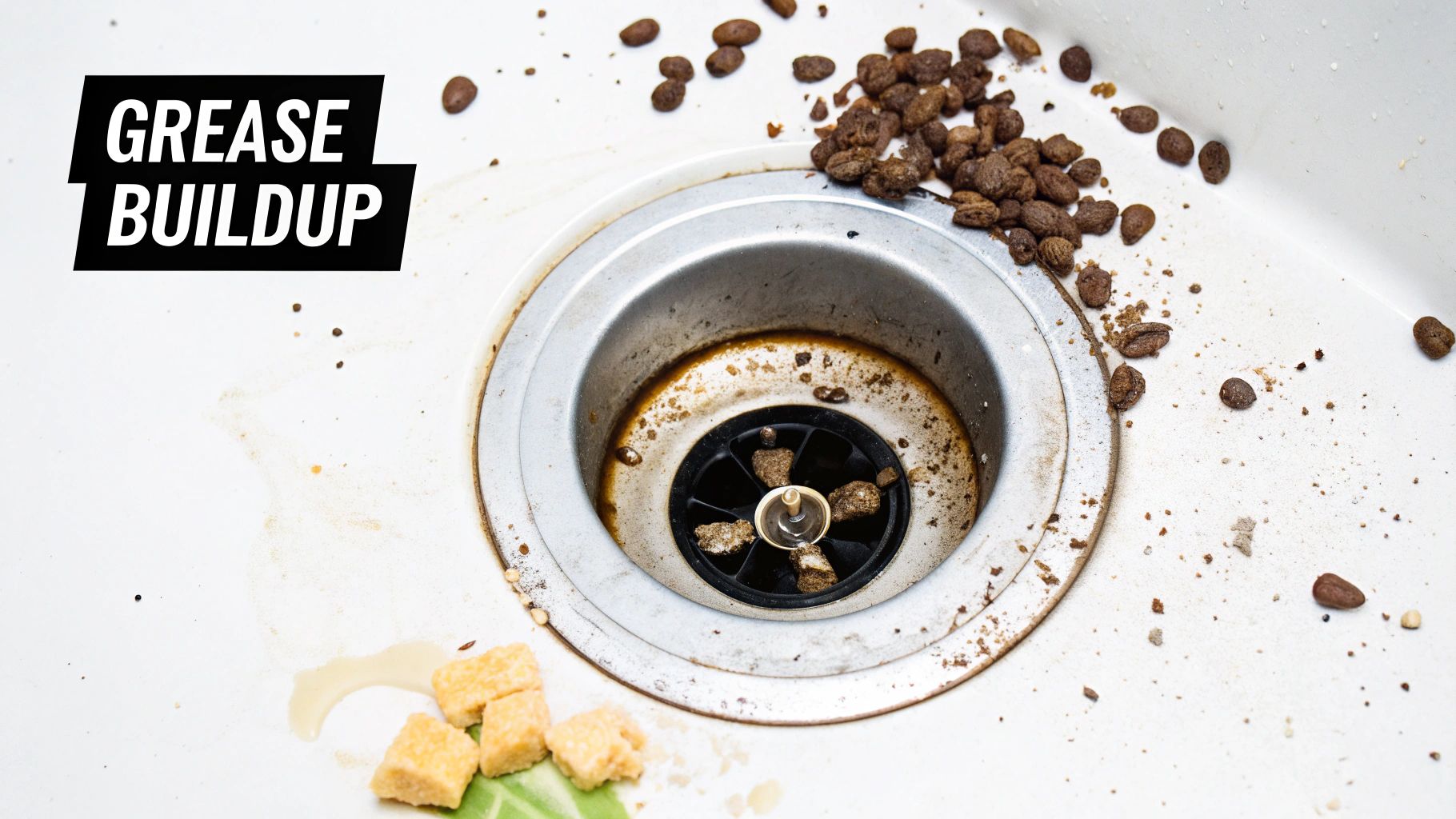
Before you can fix a blockage for good, you need to know what’s actually causing it. Most of us jump to blaming a stray clump of hair or some food scraps that went down the wrong way. But in my experience, the real culprits are far more stubborn and build up slowly over time. Here in Australia, the battle against blocked drains almost always starts with what we’re washing down our sinks and flushing down our loos.
The public enemy number one for your plumbing? Fats, oils, and grease (FOG). Pouring warm cooking grease down the kitchen sink seems innocent enough, but the moment it hits those cold pipes, it solidifies. This creates a sticky, waxy lining that just keeps getting thicker.
That greasy layer is like flypaper for everything else. Little bits of food, coffee grounds, and other debris that should wash right through get trapped. Layer builds upon layer until you’re left with a solid, stubborn blockage that brings everything to a standstill.
The Kitchen Sink Conspirators
Your kitchen drain deals with a daily assault of potential clog-makers. It’s not just the grease; a whole cocktail of other items conspires to create a perfect storm inside your pipes.
Here are a few of the usual suspects I see all the time:
- Coffee Grounds: They look fine, but they don’t dissolve. Instead, they clump together with grease to form a thick, sludgy mess.
- Eggshells: Those sharp little pieces get snagged easily on other gunk, helping to build bigger obstructions.
- Fibrous Foods: Think celery, corn husks, and potato peels. They create stringy masses that tangle up in a heartbeat.
This is a slow-burn problem. You might not notice a thing for months, but under the surface, this gunk is quietly accumulating. The first clue is usually a slow-draining sink—that’s your plumbing’s early warning system before a complete backup happens.
By the time water is backing up into your sink, that clog has likely been forming for weeks, if not months. The real secret is changing those daily habits to stop the build-up from ever starting.
The Bathroom’s Biggest Blockers
Over in the bathroom, it’s a different story but just as messy. The main troublemakers here are hair, soap scum, and things that simply should never be flushed.
Hair is infamous for weaving itself into net-like clumps inside pipes. These traps catch soap residue and skin flakes, eventually forming a dense plug that water can barely squeeze past. And that traditional bar of soap? Many contain fats that contribute to a waxy soap scum, coating the inside of your pipes and narrowing the passage.
Another huge issue comes from flushing things that aren’t made to break down in water. While loo paper disintegrates fast, many other products don’t. For instance, facial tissues are a surprisingly common cause of serious clogs in Aussie sewer drains because they’re designed to stay strong when wet.
Even products advertised as “flushable” can cause chaos. These wipes often don’t break down like they’re supposed to and are responsible for a massive percentage of major sewer blockages. They can snag on a rough edge inside a pipe or tangle with tree roots, leading to severe backups that need a professional. When things get that bad, you need a clearer picture of the problem. That’s when you might want to learn about how professional CCTV drain inspections can pinpoint the exact location and cause of these hidden issues.
At the end of the day, preventing a clog is always easier than clearing one. A little mindfulness about what goes down your drains can save you a whole lot of frustration and expense down the track.
Your Toolkit for Tackling Stubborn Clogs
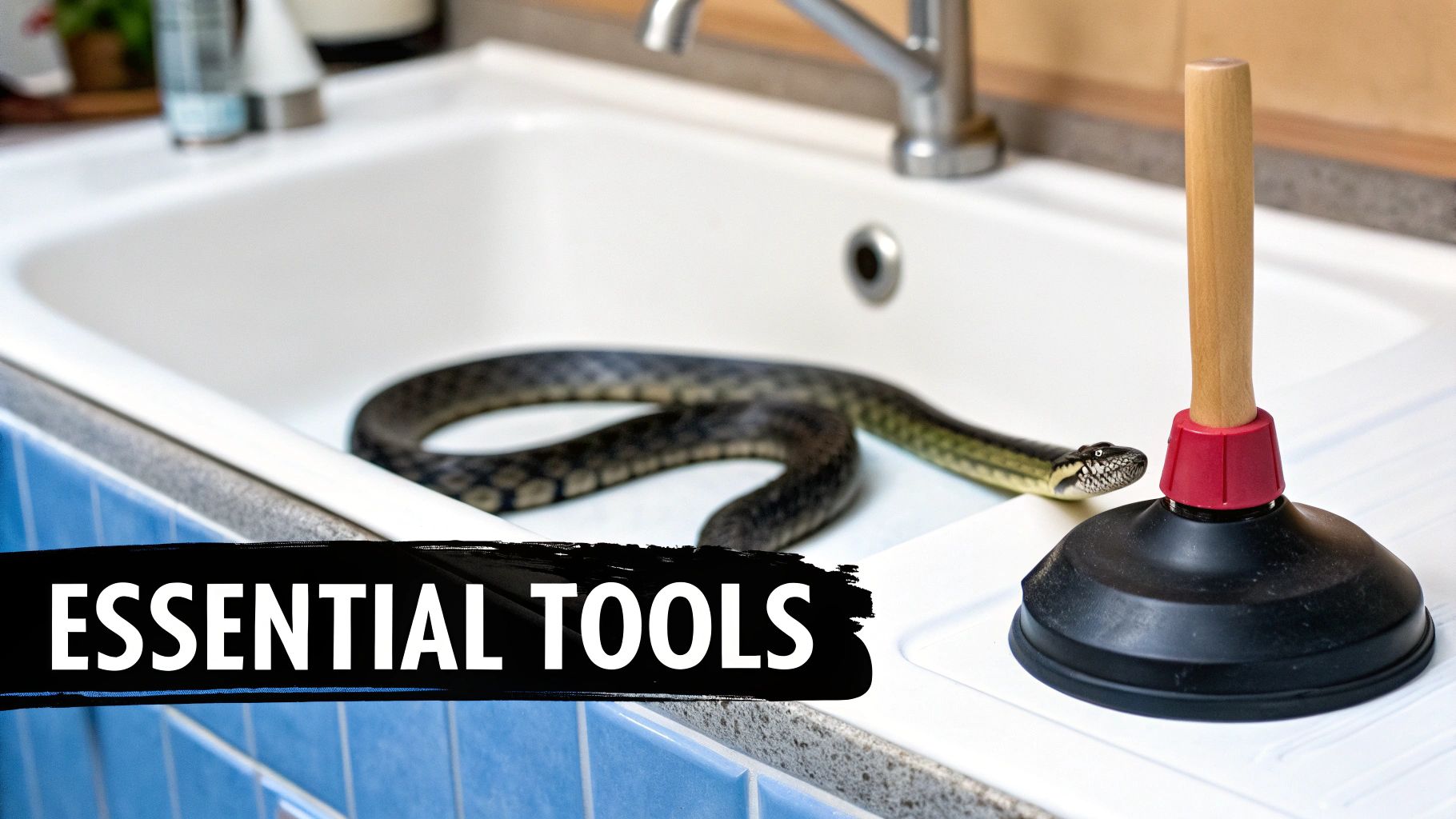
So, the boiling water and vinegar trick didn’t quite do the job. Don’t worry, it happens. Some blockages are just too stubborn or too far down the line for a simple home remedy. This is where you need to step up from kitchen chemistry to some real-deal plumbing tools.
Having the right gear ready can be the difference between a minor inconvenience and a full-blown, expensive emergency call-out. We’re moving beyond flushing now and into physically breaking up or pulling out whatever is causing the backup. It’s a bit more hands-on, sure, but it’s often exactly what’s needed to get things flowing freely again.
Master the Plunger for Maximum Impact
Before you even think about anything else, let’s talk about the humble plunger. It seems simple, but you’d be surprised how many people use the wrong one or just use it incorrectly, which makes it totally useless. The secret to a good plunge is creating a solid seal to generate real vacuum power.
Here’s something most people don’t realise: not all plungers are the same.
- Cup Plungers: These are the classic flat-bottomed ones you see everywhere. They are perfect for sinks and showers where you can get a flat seal over the drain.
- Flange Plungers: These have an extra rubber flap that folds out. This flap is designed to fit perfectly into the curved drain of a toilet bowl, creating the tight seal you need there. Using a cup plunger on a toilet is a waste of time.
To really get results on a sink or shower drain:
- First, block the overflow drain. That’s the little hole near the top of the sink. A wet rag stuffed in there stops the pressure from escaping, forcing it all down towards the clog.
- Next, add enough water to the basin to completely cover the rubber cup of the plunger. No water, no seal.
- Now, for the technique. The real power is in the pull, not the push. Give it an initial push to get the air out, then get into a rhythm of sharp, forceful pulling and pushing for about 20-30 seconds. This hydraulic shock is what will hopefully dislodge the gunk.
Introducing the Drain Snake (or Auger)
If a good plunging session doesn’t clear it, it’s time to bring out the drain snake. Also called a plumber’s auger, this is essentially a long, flexible steel coil you feed into the pipe by hand. It’s brilliant for grabbing onto clogs made of hair and soap scum that a plunger just can’t shift.
With a drain snake, you can physically reach deep into the pipe. You just carefully feed the cable down until you feel it hit something. Once you’re at the clog, you crank the handle. This either breaks the blockage into smaller pieces or lets the corkscrew tip grab onto it so you can pull the whole mess out. Be warned, it’s a messy job—what comes out is never pleasant. But it’s incredibly effective.
Here’s a pro tip: A common mistake is trying to force the snake through a blockage. If you hit a solid wall, don’t ram it. Instead, gently rotate the handle while applying just a little bit of forward pressure. This helps the auger tip either drill into the clog or navigate around a tight bend in the pipe.
Patience is key here. It might take a few goes to break up or retrieve the whole clog. Once you think you’ve got it, run plenty of hot water down the drain to flush out any leftover bits and pieces.
A Cautious Word on Chemical Cleaners
You’ve seen them in the supermarket aisle: bottles of chemical drain cleaners promising an instant fix. While they can work on minor clogs, I always tell people to treat them as an absolute last resort. These products are packed with seriously corrosive chemicals that dissolve blockages, but they can also eat away at your pipes over time, especially older metal or PVC pipes.
The safety risks are significant, too. The fumes can be nasty to breathe in, and a single splash can give you a serious chemical burn on your skin or in your eyes. Even worse, if the chemical cleaner doesn’t work, you’re left with a sink full of toxic sludge. This makes it incredibly dangerous for you or a plumber to try anything else.
If you absolutely must use one:
- Gear up: Wear protective gloves and safety glasses. No excuses.
- Ventilate: Open every window you can and get a fan going.
- Never mix chemicals: This is non-negotiable. Mixing different cleaners can create highly toxic gases.
Honestly, if you have a blockage that plunging and snaking can’t fix, it’s usually a sign of a more serious issue deeper in your system. That’s when professionals use things like high-pressure water jetting, which blasts clogs away safely and effectively without harsh chemicals. If you want to see how the pros handle the really tough jobs, check out these high-pressure jetting services to understand how they clear what DIY tools can’t.
Knowing When It’s Time to Call a Plumber
Tackling a blocked drain yourself can feel like a win, but there’s a fine line between a satisfying DIY fix and creating a much bigger, more expensive disaster. The real skill is knowing when to put the tools down.
Spotting the warning signs that a blockage is beyond your plunger or drain snake is crucial. Honestly, realising you’re out of your depth and calling in a pro early is often the smartest and cheapest move in the long run. Some issues are just symptoms of a more serious problem hiding deep in your pipes, and pushing on with DIY methods can easily do more harm than good.
The Clog That Keeps Coming Back
Sound familiar? You’ve cleared the same bathroom sink three times in the last month. A recurring clog is a classic sign that you’re only chipping away at the edges of a much bigger problem.
You might pull out a small clump of hair and think you’ve solved it, but the clog returns a week later. That’s because there’s a more stubborn obstruction further down the pipe that your efforts aren’t reaching. This could be a massive build-up of soap scum and grease, or even the start of tree roots creeping into your main sewer line. A professional plumber has the tools to find the real source and clear the entire line properly.
Gurgling Noises and Foul Odours
Your plumbing should be pretty quiet. If you start hearing strange gurgling sounds coming from your drains—especially after flushing a toilet or when the washing machine is draining—that’s your system crying for help. The gurgle is caused by trapped air getting forced through a partial blockage. It’s a sign things aren’t flowing freely.
The same goes for a persistent, foul smell you just can’t scrub away. That lingering sewage odour usually means waste isn’t draining properly and has started to decay inside your pipes. It’s not just unpleasant; it can be a genuine health hazard.
A healthy drain is a quiet and odour-free drain. Gurgling noises are your pipes telling you they can’t breathe properly, and it’s a clear signal to get a professional assessment before a minor blockage turns into a major backup.
When Multiple Drains Act Up at Once
A single slow-draining sink is usually manageable. But if the problem is happening all over the house, that’s a major red flag.
For example, if flushing the upstairs toilet causes water to back up into the shower, or running the kitchen tap makes the floor drain gurgle, you’ve likely got a blockage in your main sewer line. This is a serious situation that needs immediate attention. A main line clog affects every drain in your home and can quickly lead to raw sewage backing up into your living spaces.
This is absolutely not a DIY job. If you’re facing a scenario like this, especially after hours, it’s critical to call an emergency plumbing service to prevent serious water damage and health risks.
The Professional-Grade Equipment
So, what can a plumber do that you can’t? It really comes down to their advanced diagnostic and clearing technology.
- CCTV Drain Cameras: Plumbers can feed a high-resolution camera deep into your pipes to see exactly what’s causing the blockage. They can tell if it’s a collapsed pipe, invasive tree roots, or a solid mass of grease. No guesswork involved.
- High-Pressure Hydro-Jetters: Forget the basic drain snake. A hydro-jetter uses incredibly powerful streams of water to blast through even the most stubborn blockages. It doesn’t just poke a hole through the gunk; it scours the entire inner surface of the pipe, removing years of build-up and leaving it perfectly clean.
Trying to tackle a severe blockage without these tools can easily lead to cracked pipes or just pushing the problem further down the line, making it even harder to fix. Calling a licensed professional ensures the job is done safely and effectively.
DIY vs Professional Drain Cleaning Costs in Australia
Deciding between a DIY approach and calling a plumber often comes down to cost. Here’s a general look at what you might expect to spend in Australia for different types of drain issues.
| Service Type | Typical Cost Range (AUD) | Best For | Notes |
|---|---|---|---|
| DIY Chemical Cleaners | $10 – $30 | Minor clogs from hair or soap scum in a single sink/shower. | Can be harsh on older pipes; often a temporary fix. |
| DIY Plunger/Hand Auger | $20 – $80 | Simple, localised blockages in toilets, sinks, or showers. | Limited reach and power; ineffective on main line clogs. |
| Professional Drain Snaking | $150 – $250 | Stubborn clogs in a single drain line that DIY tools can’t reach. | More effective than a hand auger but may not clear all residue. |
| Professional Hydro-Jetting | $300 – $600+ | Severe blockages, main sewer line clogs, recurring issues, tree roots. | Cleans the entire pipe wall; a more permanent solution. |
| CCTV Drain Inspection | $250 – $450 | Diagnosing recurring problems, finding the exact location of a blockage. | Often combined with jetting for a complete service. |
While DIY methods are cheaper upfront for minor issues, professional services provide a definitive solution for complex or recurring problems, ultimately saving you money and hassle in the long run.
What Does It Really Cost to Get a Drain Unblocked?
So, you’ve tried everything you can think of, and that stubborn drain still isn’t budging. It’s time to call in a professional plumber. But for many people, the thought of that final bill can be a bit nerve-wracking.
Let’s break down what actually goes into a plumber’s quote. Knowing the ‘why’ behind the price helps you understand the value you’re getting and feel confident you’re paying a fair price for a fix that will last.
A simple kitchen sink clog is never going to cost the same as a major sewer line disaster caused by invasive tree roots. The final price tag is always a reflection of the unique problem at your place.
The Factors That Shape the Final Bill
When a plumber gives you a quote, they aren’t just pulling a number out of thin air. They’re calculating the time, tools, and expertise needed for your specific situation.
Here’s a look at what they’re weighing up:
- How bad is the blockage? A simple clump of hair and soap scum in a shower drain is a quick fix. A solid, compacted mass of grease or a collapsed pipe is a whole different ball game.
- Where is the clog hiding? If the blockage is right under the sink in the U-bend, it’s easy to get to. If it’s ten metres down the main sewer line buried under your garden, it will take more time and specialised gear to reach.
- Is this an emergency? A backed-up toilet on a Sunday night will always cost more than a slow-draining sink you book in for a Tuesday morning. After-hours and weekend call-outs come with higher labour rates, and that’s standard across the board.
- What tools are needed for the job? Some clogs can be sorted with a professional-grade drain snake. Others need the serious power of a hydro-jetter to blast them clear, and maybe even a CCTV drain camera to figure out what’s really going on down there.
The biggest factor influencing the cost is almost always accessibility. A blockage deep in the main line takes a lot more time, effort, and heavy-duty equipment to fix than a simple clog just inside a basin trap.
So, What’s the Going Rate in Australia?
It helps to have a rough idea of what to expect so you can budget accordingly and know if a quote seems way off. In Australia, the cost to unblock a drain varies pretty widely depending on all the factors we just covered.
You could be looking at as little as $100 for a straightforward job on a sink, or upwards of $800 for a severe sewer line blockage.
For most standard drain cleaning jobs, you can generally expect to pay somewhere between $100 and $275. Just remember, an emergency call-out can easily add an extra $100 to $300 on top of that. For a more detailed breakdown, you can check out guides that explain the full scope of drain unblocking costs.
Why Paying a Pro Is Often the Smarter Move
I get it, the upfront cost can feel a bit steep compared to a $15 bottle of chemical drain cleaner. But hiring a licensed plumber is about getting a proper, long-term solution, not just a temporary fix.
A good plumber doesn’t just clear what’s blocking the pipe today; they figure out why it got blocked in the first place.
Using tools like a CCTV camera, they can spot the real culprits—things like tree roots cracking a pipe, a section of pipe that has collapsed, or even poor installation from years ago. This diagnostic work means you’re not just paying to get the water flowing again for a few weeks. You’re investing in the health of your home’s entire plumbing system.
Still Have Questions About Blocked Drains?
Once you’ve wrestled a blockage and won, you might still have a few things on your mind. It’s one thing to fix the problem in front of you, but another entirely to feel confident you can prevent it from happening again.
Let’s run through some of the most common questions we get from homeowners. We’ll cover everything from what’s truly safe to put down the sink to the sometimes-tricky rules around rental properties.
What Can I Actually Put Down the Kitchen Sink?
This is the big one. Why? Because what you do here every day makes all the difference. The simplest rule I can give you is this: only water and tiny, easily dissolved food scraps should go down the plughole. Your sink drain is for liquids, not a stand-in for the rubbish bin.
Even if you have a powerful garbage disposal, some things are a definite no-go. To save yourself a world of future headaches, keep these items out of your sink at all costs:
- Fats, Oils, and Grease (FOG): As we’ve mentioned, these are public enemy number one for drains. They seem liquid when hot, but they quickly cool and solidify inside your pipes, creating a sticky trap for everything else. Pour cooled grease into an old jar and toss it in the bin.
- Coffee Grounds: They might look fine, but they don’t dissolve. Instead, they clump together with any existing grease and form a thick, stubborn sludge.
- Eggshells: The sharp, tiny pieces are perfect for snagging on any gunk already in the pipe, helping to build a bigger blockage.
- Starchy and Fibrous Foods: Think potato peels, leftover rice, or pasta. These foods either expand in water or create stringy masses that are notorious for causing clogs.
Being strict about this list will drastically cut down on your chances of dealing with another blockage.
Are ‘Flushable’ Wipes Really Safe to Flush?
Let me be blunt: no, they are not. This is probably the biggest myth in modern plumbing, and it’s the culprit behind some of the most catastrophic sewer blockages we see all across Australia.
Sure, the wipe disappears when you flush, but it doesn’t break down. Toilet paper is designed to disintegrate almost immediately in water. ‘Flushable’ wipes, on the other hand, are made with tough fibres (often containing plastic) so they don’t tear while you’re using them. That strength is their downfall in a sewer system.
These wipes can travel a long way before they catch on a rough pipe joint, a tree root, or a bend in the line. Once they snag, they start a chain reaction, creating a blockage that can back up an entire street. Do your plumbing a favour: always put wipes in the bin.
Who Is Responsible for a Blocked Drain in a Rental Property?
This causes a lot of confusion for tenants and landlords alike. While the rules can differ slightly, the core principle is usually quite clear. In New South Wales, for instance, the responsibility is well-defined: landlords must provide plumbing in good working order at the start of a lease and are responsible for repairs from fair wear and tear. If you have an emergency like a blocked toilet, the landlord generally covers the cost of getting it fixed promptly. You can find more detail on tenant and landlord responsibilities in NSW.
As a general guide:
- It’s the landlord’s problem if… the blockage is caused by an issue with the pipes themselves. Think tree roots, a collapsed section of pipe, or just old, deteriorating plumbing.
- It’s the tenant’s problem if… the blockage is caused by something that shouldn’t have gone down the drain, like wipes, nappies, or a buildup of kitchen grease.
If you’re a tenant and a drain blocks for no obvious reason, your first step should always be to contact your property manager or landlord straight away.
How Often Should My Drains Be Professionally Cleaned?
There’s no magic number here, as it really depends on the age of your home, the state of your pipes, and even your family’s habits. But as a good rule of thumb for preventative care, getting a professional clean every 18 to 24 months is a smart move.
However, if you live in an older home with original clay pipes or have large, established trees on your property, you might want to consider an annual inspection and clean. It’s a sound investment. This kind of preventative maintenance can spot trouble like early tree root intrusion before it causes a messy and expensive backup. A high-pressure water jetter doesn’t just clear a blockage; it scours the pipes clean, which goes a long way in preventing future issues.
If you’re staring down a stubborn blockage or just want the peace of mind that comes with a professional drain clean, the expert team at CGC Plumbing Services is ready to help. We offer 24/7 emergency service with transparent, $0 call-out pricing for homes and businesses across Melbourne’s eastern suburbs. Don’t let a blocked drain ruin your day—get in touch with us for a fast, effective, and guaranteed fix.
Article created using Outrank