A slow-draining sink, a gurgling loo, or a shower that's backed up can throw a real spanner in the works of your daily routine. It’s a common frustration for homeowners across Melbourne, and when it happens, the immediate question is always the same: what's the best way to unblock drains without making things worse? The internet is chock-a-block with advice, from old household tricks to aggressive chemical solutions, making it hard to know which method is right for your specific situation. A minor clog in the kitchen sink caused by grease needs a different approach than a major blockage in your main sewer line from tree roots.
This guide is designed to cut through that confusion. We've put together a comprehensive list of the most effective drain-clearing methods, covering everything from simple, DIY-friendly fixes to powerful, professional-grade techniques. For each method, we'll give you a clear, step-by-step guide, outline the essential pros and cons, and explain exactly when and where it should be used. Whether you're dealing with a simple hair clog or a stubborn, recurring issue, this roundup will equip you with the practical knowledge to tackle the problem confidently and get your plumbing flowing freely again.
1. The Boiling Water Method
The boiling water method is often the simplest and most accessible first step for tackling minor drain blockages. It’s a classic, no-chemical approach that works wonders on clogs caused by organic materials like grease, fats, and soap scum. This technique is often considered the best way to unblock drains for simple, everyday issues before escalating to more complex solutions.
The science is straightforward: the intense heat from boiling water melts and liquefies fatty deposits and loosens sticky soap residue clinging to the inside of your pipes. The subsequent flush of water then carries the dissolved debris away, clearing the path and restoring flow.
When to Use This Method
This approach is highly effective for:
- Kitchen Sinks: Ideal for slow-draining sinks clogged with cooking oils, grease, and food fats.
- Bathroom Drains: Works well on bathroom sinks and showers where soap scum and conditioner residue have built up over time.
- Preventative Maintenance: A fantastic weekly or fortnightly habit to keep high-use drains, especially in the kitchen, running freely.
How to Do It Right
For the best results, follow these steps precisely:
- Boil the Kettle: Bring a full kettle or a large saucepan of water to a rolling boil.
- First Pour: Carefully pour about half of the boiling water directly down the drain. Pour slowly to avoid splashing and potential burns.
- Wait a Bit: Allow the hot water to sit for five to ten minutes. This gives it time to work on dissolving the gunk.
- Second Pour: Pour the remaining boiling water down the drain to flush away the loosened debris.
- Cold Water Flush: After a few more minutes, run the cold tap for a minute. This helps to congeal and wash away any remaining fatty particles.
Important Safety Note: This method is safe for metal and ceramic pipes. However, avoid using boiling water on PVC pipes, as the extreme heat can soften the plastic and compromise the glued joints, potentially leading to leaks. Have a squiz under your sink to confirm your pipe material before proceeding.
2. The Baking Soda and Vinegar Method
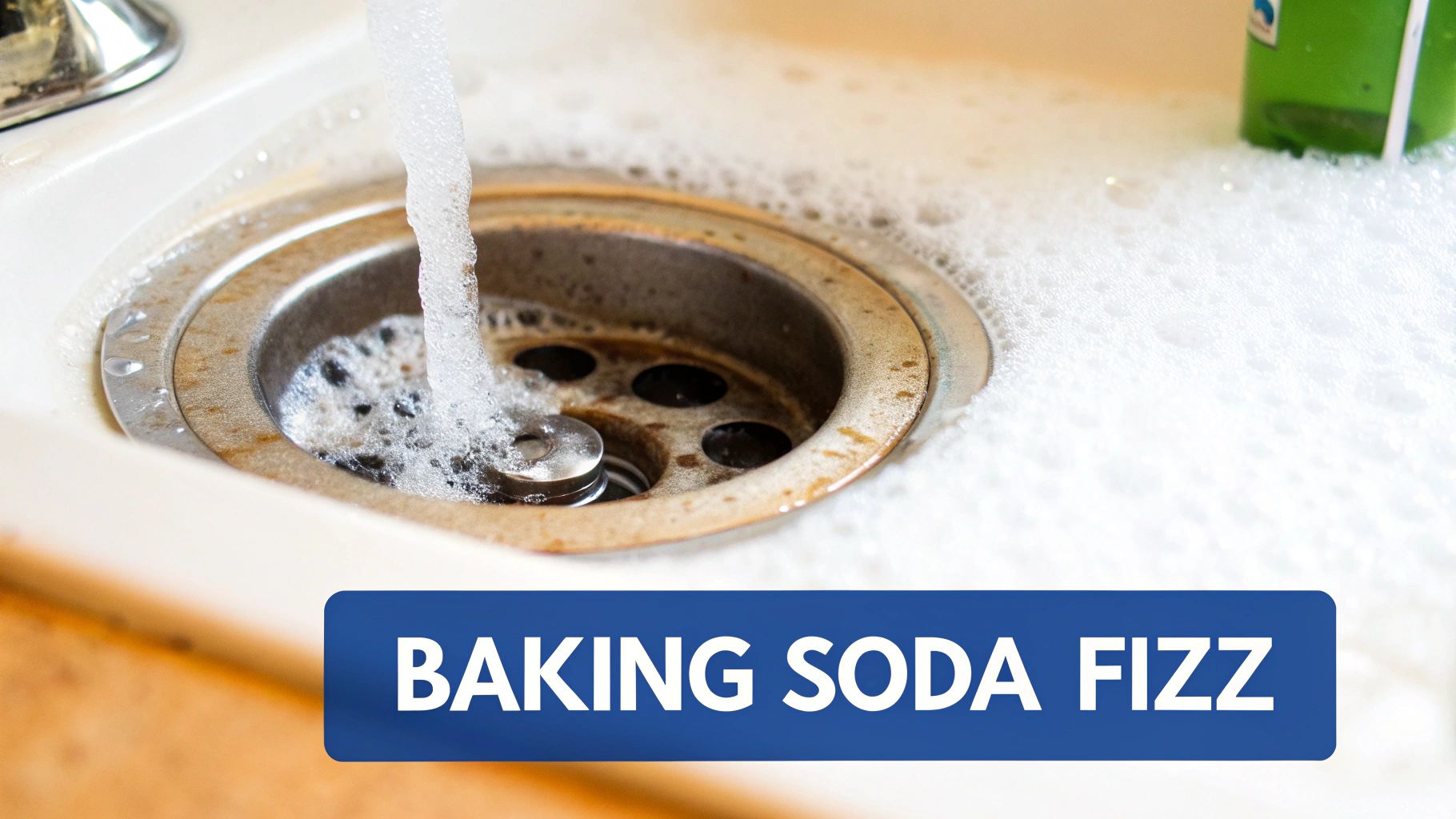
The baking soda and vinegar method is a classic eco-friendly solution for tackling minor drain blockages. This popular DIY approach uses a simple chemical reaction to break down organic matter, making it a fantastic natural alternative to harsh commercial drain cleaners. For many homeowners, this fizzy, powerful combination is the best way to unblock drains without resorting to toxic chemicals.
The science behind it is a reaction between an acid (vinegar) and a base (baking soda). When mixed, they create carbon dioxide gas, which expands rapidly. This fizzing action agitates and dislodges soft blockages like soap scum, grease, and food particles, while the acetic acid in the vinegar helps to dissolve the grime.
When to Use This Method
This natural approach is highly effective for:
- Bathroom Sinks: Excellent for slow-draining sinks clogged with a combination of soap scum, toothpaste residue, and hair.
- Kitchen Sinks: Works well on mild blockages caused by organic food waste and light grease buildup.
- Shower Drains: Ideal for breaking down the residue left by soap, shampoo, and conditioners.
- Monthly Maintenance: A safe and effective routine to prevent buildup and keep drains smelling fresh, especially in rental properties.
How to Do It Right
For the best results, follow these steps precisely:
- Start with Baking Soda: Pour about half a cup of baking soda directly down the drain opening.
- Add Vinegar: Follow immediately with half a cup of white vinegar. The mixture will start to fizz and bubble straight away.
- Cover the Drain: Immediately place a plug or a damp cloth over the drain opening. This traps the fizzing reaction below, forcing the pressure downwards onto the clog.
- Let It Sit: Let the mixture sit for at least 30-60 minutes. For tougher clogs, leaving it overnight can yield better results. You can find more detailed instructions on how to unblock a sink with this method on cgcplumbingservices.com.au.
- Boiling Water Flush: Finish by carefully pouring a full kettle of boiling water down the drain to flush away all the dislodged debris.
Important Safety Note: While generally safe for all pipe types, including PVC, this method is most effective on soft, organic clogs. It may not be powerful enough for severe blockages or clogs caused by solid foreign objects. Never mix this solution with commercial drain cleaners, as this can create dangerous chemical reactions.
3. The Plunger Method (Cup and Flange Types)
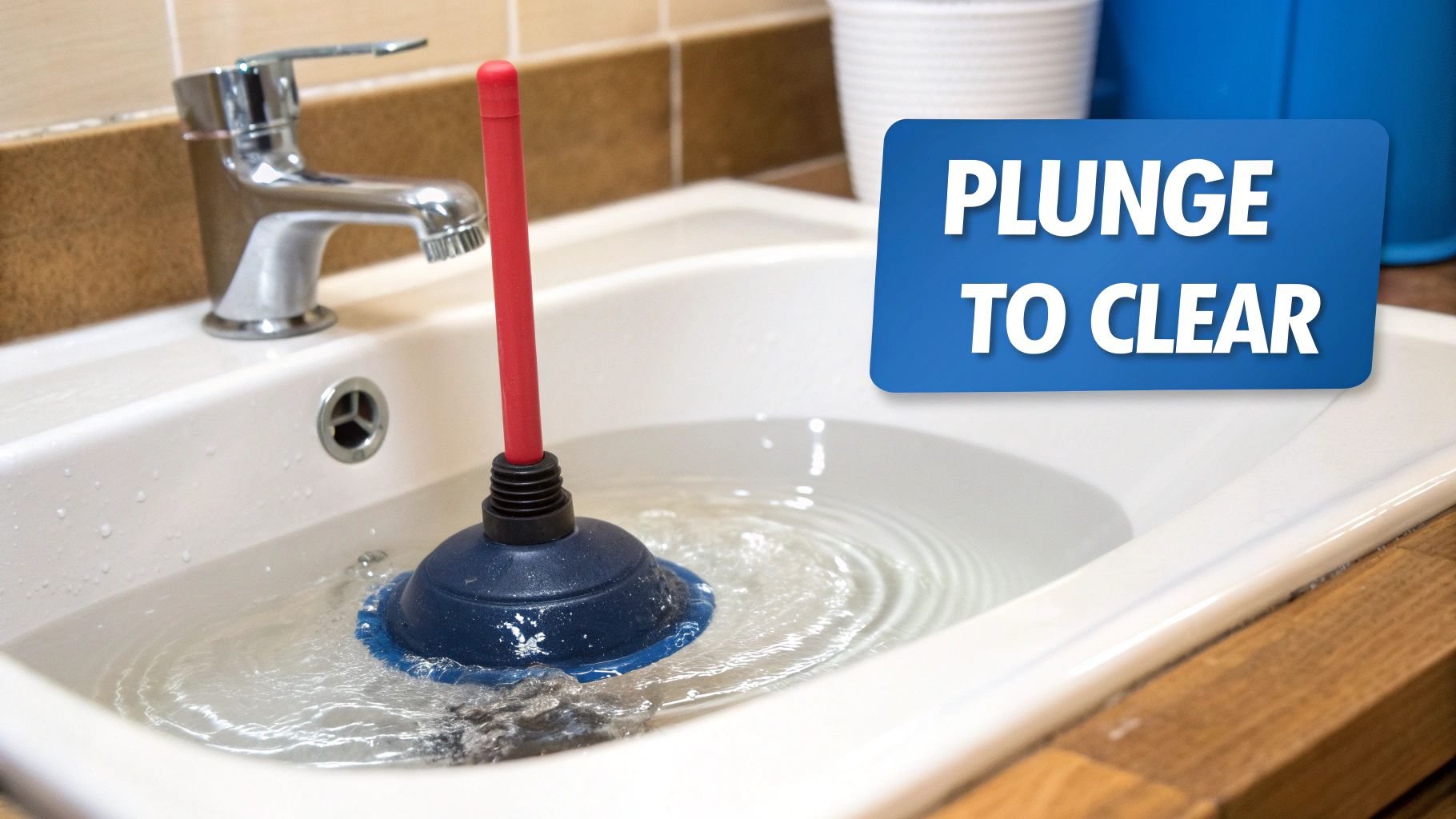
The plunger is a classic mechanical tool that offers a powerful, chemical-free solution for dislodging stubborn drain blockages. It functions by creating alternating pressure and suction through hydraulic force, effectively pushing and pulling at the clog until it breaks apart. Understanding the two main types—the cup plunger for flat surfaces and the flange plunger for toilets—is crucial for success and makes it a versatile contender for the best way to unblock drains.
This method works by forming an airtight seal around the drain opening. When you push down, you force the trapped water against the blockage. When you pull up, you create a vacuum that suctions the blockage back towards you. This repeated agitation is highly effective at dislodging clogs from hair, food particles, and excessive toilet paper.
When to Use This Method
The plunger is a go-to tool for a wide range of common household clogs:
- Bathroom Sinks and Tubs: A standard cup plunger is perfect for blockages caused by hair and soap scum.
- Toilets: The flange plunger, with its extra rubber flap, is specifically designed to create a tight seal in the curved toilet bowl to clear waste or paper clogs.
- Kitchen Sinks: Effective for dislodging food particles that have created a physical obstruction in the drain pipe.
How to Do It Right
Maximising the plunger's power requires correct technique:
- Select the Right Plunger: Use a cup plunger for sinks and tubs, and a flange plunger for toilets.
- Ensure a Good Seal: Make sure there is enough water in the sink, tub, or bowl to completely cover the plunger's cup (about 5-7 cm). For a better seal, apply a thin layer of petroleum jelly to the rim of the plunger.
- Block Overflow Drains: Use a damp cloth to securely block any overflow openings on the sink or tub. This prevents air from escaping and directs all the pressure towards the clog.
- Plunge Correctly: Place the plunger over the drain, ensuring a tight seal. Push down gently on the first plunge to expel air, then begin plunging vigorously with firm up-and-down strokes for 15-20 seconds.
- Final Suction Pull: On the last stroke, pull the plunger up sharply to break the seal. This creates a powerful suction that can help pull the blockage free.
Important Usage Note: Never use a plunger immediately after pouring chemical drain cleaners down the drain. The plunging action can cause dangerous chemical splashback, leading to serious skin or eye injuries. Always try mechanical methods like plunging first.
4. The Drain Snake/Auger (Manual and Power)
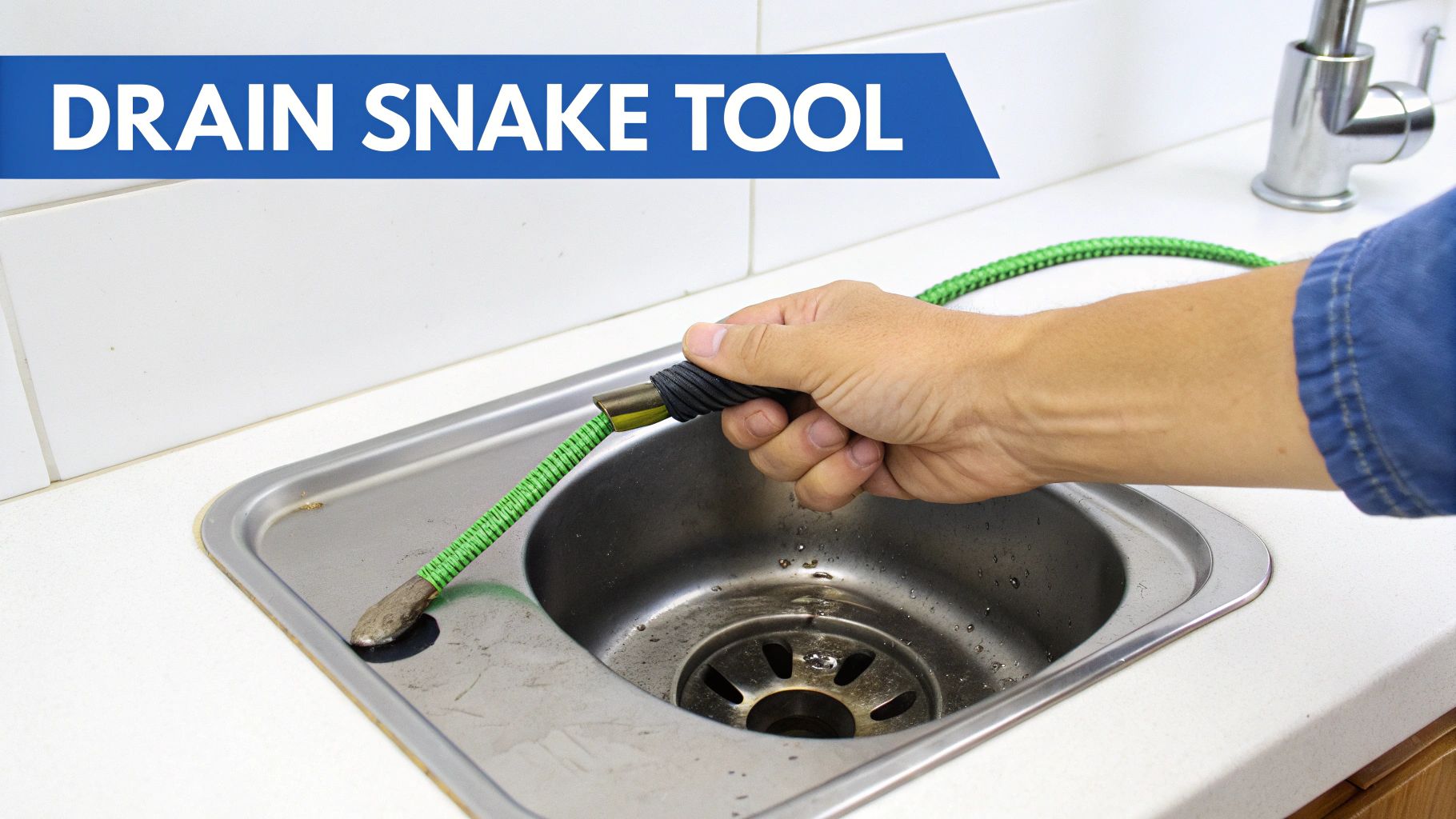
When chemical solutions and boiling water fail to clear a stubborn blockage, a drain snake or auger is the next logical step. This physical tool is designed to reach deep into pipes to break up or retrieve clogs that other methods can't touch. For many homeowners and professionals, a drain snake represents the best way to unblock drains when facing compacted hair, foreign objects, or other solid obstructions.
The tool consists of a long, flexible metal cable with a corkscrew-like tip. As you feed the cable into the drain and turn the handle, the tip either drills through the blockage, breaking it into smaller, manageable pieces, or latches onto it so you can pull the entire obstruction out. This direct, mechanical approach offers a powerful solution without resorting to harsh chemicals.
When to Use This Method
This hands-on tool is highly effective for:
- Bathroom Drains: Excellent for pulling out tough clogs of hair and soap scum in showers, bathtubs, and sinks.
- Deep Blockages: Ideal for obstructions that are located beyond the P-trap, further down the plumbing line.
- Retrieving Objects: Perfect for snagging items accidentally dropped down the drain, such as jewellery or small toys.
- Tougher Clogs: When you suspect the blockage is more solid than simple grease or soap buildup.
How to Do It Right
For the best results, follow these steps precisely:
- Insert the Snake: Carefully feed the tip of the auger cable into the drain opening.
- Advance Slowly: Push the cable in gently until you feel resistance—that's the clog.
- Rotate and Push: Begin turning the handle clockwise while applying gentle, steady pressure. This allows the corkscrew tip to hook into or break up the blockage. Don't force it.
- Retrieve the Clog: Once you feel the tip has latched onto the obstruction, stop rotating and slowly pull the snake back out of the drain, bringing the clog with it.
- Flush the Pipe: After removing the snake and the debris, run hot water down the drain for several minutes to flush out any remaining particles.
Important Safety Note: Always wear gloves and eye protection when using a drain snake, as the process can be messy. For toilets, use a closet auger specifically designed with a rubber sleeve to prevent scratching the porcelain bowl. If you can’t clear the blockage or suspect a deeper issue like tree roots, it might be time for a professional approach. You can find out more about our CCTV drain inspections to accurately diagnose the problem.
5. Chemical Drain Cleaners
When facing a stubborn blockage, commercial chemical drain cleaners are a powerful and fast-acting solution. These products, readily available at most supermarkets and hardware stores like Bunnings, use strong caustic, oxidising, or acidic formulas to dissolve organic obstructions like hair, grease, and soap scum. While often effective for emergency clogs, they represent a more aggressive approach and are considered the best way to unblock drains only when other methods have failed and professional help isn't immediately available.
The chemical reaction generated by these cleaners rapidly breaks down the molecular structure of the clog material, turning solid masses into a semi-liquid state that can be flushed away. Brands like Drano and Liquid-Plumr are common household names, offering a quick fix for severely blocked drains.
When to Use This Method
This powerful approach is best reserved for specific, challenging situations:
- Stubborn Hair Clogs: Highly effective in bathroom showers and sinks where hair is the primary culprit.
- Severe Grease Buildup: Can cut through dense grease accumulations in kitchen sinks that hot water alone can't clear.
- Emergency Unclogging: A last resort for completely blocked sinks or showers when immediate flow is needed.
- Property Maintenance: Used cautiously by property managers for quick resolutions in tenanted properties, although regular professional jet blasting is a safer long-term strategy.
How to Do It Right
Safety is paramount when using chemical cleaners. Follow these steps meticulously:
- Read the Label: Carefully read and follow the manufacturer's instructions. Don't deviate from the recommended amount or waiting time.
- Ensure Ventilation: Open windows and turn on exhaust fans to ensure the area is well-ventilated before you begin.
- Gear Up: Wear protective rubber gloves and safety glasses to protect your skin and eyes from splashes.
- Apply the Product: Pour the specified amount of the chemical cleaner directly down the drain. Don't stand directly over the drain as you pour.
- Wait and Flush: Allow the product to work for the recommended time (usually 15-30 minutes). Once the time is up, flush the drain thoroughly with cold water, as hot water can react negatively with some chemicals.
Important Safety Note: Never mix different chemical drain cleaners, as this can create toxic gas. Avoid using them in toilets or with a plunger, which can cause dangerous splashing. Be aware that repeated use can damage older metal pipes and even some types of PVC, so use these products sparingly. If you have a septic system, ensure the product is certified as septic-safe.
6. The Wet/Dry Vacuum Method
For stubborn clogs that other methods can't dislodge, a wet/dry vacuum offers a powerful, suction-based solution. Instead of pushing a blockage further down, this technique physically pulls the debris out of the pipe, making it an incredibly effective tool for certain types of obstructions. This approach is often considered the best way to unblock drains when you need to retrieve a lost item or deal with solid, non-greasy clogs.
The principle is simple: a high-powered vacuum set to its "wet" function creates intense suction at the drain opening. By forming a tight seal, the vacuum can literally pull water and the offending blockage material up and out of the plumbing system into the vacuum's collection tank.
When to Use This Method
This approach is highly effective for:
- Retrieving Lost Items: Perfect for recovering valuable items like jewellery, contact lenses, or small toys that have accidentally fallen down the drain.
- Solid Debris Clogs: Excellent for extracting clumps of hair, wet paper towels, food debris, or even sanitary products from sinks, showers, and toilets.
- Workshop and Garage Drains: Ideal for clearing drains clogged with sawdust, dirt, and other workshop debris.
- Basement Floor Drains: A great first step for clearing floor drains after minor flooding or a spill.
How to Do It Right
For the best results, follow these steps precisely:
- Prepare the Vacuum: Set your wet/dry vacuum to the “wet” setting. Remove the dry filter to prevent damage, as per your model’s instructions.
- Create a Seal: For sinks, you can often just press the hose firmly over the drain opening. For a tighter seal, you might use a plunger head as an adapter.
- Block the Overflow: Use a damp rag or cloth to completely block the overflow hole on the sink or bathtub. This is crucial for creating maximum suction.
- Activate Suction: Turn the vacuum on to its highest setting. You should feel a strong pull as it forms a vacuum in the pipe.
- Pulse and Pull: Rather than continuous suction, try pulsing the vacuum on and off for a few seconds at a time. This can help jolt the clog loose.
Important Safety Note: Ensure your vacuum is specifically rated for wet use to avoid electrical shock or damage to the motor. Never use a standard household vacuum cleaner for this task. Always empty the collection tank carefully, especially if you suspect you’ve sucked up hazardous materials.
7. Hydro Jetting (Professional)
When faced with severe or recurring drain blockages, hydro jetting is the ultimate professional solution. This powerful technique uses a high-pressure stream of water, often between 3,000 and 8,000 PSI, to scour the inside of pipes. It’s an incredibly effective method that doesn’t just break through a clog; it comprehensively cleans the entire pipe diameter, removing years of accumulated grease, scale, debris, and even tree roots. For persistent issues, this is often considered the best way to unblock drains for a long-term fix.
The technology involves a specialised hose and nozzle that propels itself through the pipe, blasting away obstructions from every angle. This process restores pipes to a near-new condition, significantly improving flow and preventing future blockages.
When to Use This Method
Hydro jetting is a heavy-duty solution reserved for serious plumbing problems, such as:
- Severe Grease Buildup: The only method that truly eradicates thick, hardened grease in commercial kitchens or residential lines.
- Tree Root Intrusion: Powerfully cuts through and flushes out invasive tree roots that have breached main sewer lines.
- Recurring Clogs: Ideal when other methods provide only temporary relief, indicating a more substantial underlying issue.
- Full System Clean-out: Used for preventative maintenance in multi-unit buildings and commercial facilities to maintain optimal drainage.
How It’s Done Right
This is strictly a job for licensed and insured professionals. The process typically involves:
- CCTV Inspection: A plumber first performs a camera inspection to assess the pipe's condition, locate the blockage, and ensure the pipe can withstand the high pressure.
- Access Point Selection: The technician identifies the best access point, such as a cleanout, to insert the jetting hose.
- High-Pressure Jetting: The specialised nozzle is fed into the pipe, and the water jet is activated. It blasts away debris as it moves through the line.
- Verification: A post-jetting camera inspection is often performed to confirm the pipe has been thoroughly cleaned and the blockage is completely removed.
Important Professional Note: Always ensure your plumber conducts a pre-jetting camera inspection. Applying high-pressure water to pipes that are already cracked, corroded, or fragile can cause significant damage. This initial step is crucial for protecting your plumbing system. You can learn more about this professional service and see if it's right for your situation by exploring details on high-pressure water jetting.
8. Enzymatic/Biological Drain Cleaners
Enzymatic or biological drain cleaners are a modern, eco-friendly solution for tackling organic blockages. Unlike harsh chemical cleaners that dissolve clogs with corrosive acids, these products use a blend of beneficial bacteria and enzymes to naturally digest waste like grease, hair, food particles, and soap scum. This makes them a fantastic, non-corrosive choice and often the best way to unblock drains in delicate plumbing systems.
The science behind it is simple and effective. The enzymes act as catalysts, breaking down complex organic matter into smaller, more manageable pieces. The live bacteria then consume these smaller particles, converting the waste into harmless carbon dioxide and water, effectively eating the clog away over several hours.
When to Use This Method
This gentle yet powerful approach is highly effective for:
- Preventative Maintenance: Ideal for monthly use in all drains to prevent build-up before it becomes a major blockage.
- Septic System Homes: These cleaners are safe for septic tanks as they don’t harm the system’s natural bacterial balance.
- Older Homes: Perfect for properties in Melbourne’s eastern suburbs with older, more fragile pipes that could be damaged by chemicals.
- Odour Control: Excellent for eliminating foul smells from garbage disposals and rarely used drains by digesting the decaying organic matter causing the odour.
How to Do It Right
For the best results, timing and patience are key:
- Activate the Bacteria: If using a powdered formula, mix it with lukewarm water (around 38-40°C) as per the product instructions to activate the bacteria.
- Apply at Night: Pour the solution down the affected drain just before heading to bed. This gives the product an extended, uninterrupted period to work.
- Let It Sit: Don't run any water down the drain for at least 6-8 hours. The enzymes and bacteria need this time to colonise and digest the blockage.
- Morning Flush: In the morning, flush the drain with warm (not boiling) water for a couple of minutes to clear away any remaining residue.
- Be Consistent: For preventative maintenance, use the product weekly or fortnightly to keep pipes clean and flowing freely.
Important Safety Note: While these cleaners are non-toxic and safe for all pipe types, including PVC, their effectiveness can be nullified by other chemicals. Avoid using bleach, disinfectants, or harsh chemical cleaners immediately before or after an enzymatic treatment, as they will kill the beneficial bacteria.
8-Method Drain Unblocking Comparison
| Method | Implementation Complexity 🔄 | Resources & Cost ⚡ | Expected Outcomes / Effectiveness 📊⭐ | Ideal Use Cases 💡 | Key Advantages ⭐ |
|---|---|---|---|---|---|
| Boiling Water Method | 🔄 Low — simple pouring steps | ⚡ Minimal — kettle/stove; free | 📊 Low–Medium — works on grease/soap; limited for solids | 💡 Minor kitchen/bath grease or soap buildup; preventative use | ⭐ Eco‑friendly, immediate, no special tools |
| Baking Soda & Vinegar Method | 🔄 Low — simple but requires wait time | ⚡ Low — common pantry items; very cheap | 📊 Low–Medium — good for mild organic clogs and deodorizing | 💡 Slow drains, routine maintenance, odor control | ⭐ Non‑toxic, safe for most pipes, inexpensive |
| Plunger Method (Cup & Flange) | 🔄 Medium — requires proper technique | ⚡ Low — plunger $5–20; reusable | 📊 Medium–High — fast and effective on many household clogs | 💡 Toilets, sinks, tubs with soft/air‑pocket clogs | ⭐ Immediate results, chemical‑free, widely effective |
| Drain Snake / Auger (Manual & Power) | 🔄 Medium–High — skill and care needed | ⚡ Moderate–High — $10–500 depending on type | 📊 High — removes hair, debris, and many solid obstructions | 💡 Deep or recurring blockages; retrieving items; bends | ⭐ Reaches deep, physically removes clogs, reusable |
| Chemical Drain Cleaners | 🔄 Low — simple application but hazardous | ⚡ Low per use ($5–15) but safety costs high | 📊 High for organic clogs; ineffective on solid objects; safety concerns | 💡 Emergency unclogging of organic/grease stoppages | ⭐ Fast‑acting and widely available |
| Wet/Dry Vacuum Method | 🔄 Medium — requires good seal technique | ⚡ Moderate — wet/dry vac $50–200; adapters needed | 📊 Medium–High — excellent for solids near drain opening | 💡 Retrieving dropped items; hair or debris close to entry | ⭐ Extracts solids without chemicals; multi‑use tool |
| Hydro Jetting (Professional) | 🔄 Very High — professional operation required | ⚡ High — $350–800+ per session; specialist equipment | 📊 Very High — removes heavy buildup, roots, and scale | 💡 Severe/recurrent blockages, commercial lines, root intrusion | ⭐ Most thorough, long‑lasting cleaning; water‑only method |
| Enzymatic / Biological Cleaners | 🔄 Low — apply and wait (overnight) | ⚡ Moderate — $10–25 per treatment; warm temps help | 📊 Low–Medium treatment; High for prevention and odor control | 💡 Regular preventative maintenance; septic systems; eco‑homes | ⭐ Safe for pipes/septic, eco‑friendly, continuous digestion |
When DIY Isn't Enough: Your Local Melbourne Plumbing Experts
You now have a powerful arsenal of techniques to tackle clogged drains, from the simple and effective boiling water flush to the more hands-on approach of a drain snake. We've explored the fizzing power of baking soda and vinegar for minor build-ups, the classic force of a plunger for stubborn sink blockages, and even the eco-friendly potential of enzymatic cleaners for preventative maintenance. Each method has its place, and understanding when and how to use them is the key to keeping your home's plumbing flowing smoothly.
The ultimate goal is not just to fix a single clog but to build confidence in managing your home's plumbing. Knowing the best way to unblock drains for different situations saves you time, money, and the stress that comes with a sudden backup. It empowers you to handle minor issues before they escalate into major emergencies, protecting your pipes and property.
Key Takeaways for Clear Drains
Before you put your tools away, let's recap the most crucial insights from our guide:
- Start Simple: Always begin with the least invasive methods, like boiling water or a plunger, before moving to more aggressive solutions. This minimises the risk of damaging your pipes.
- Safety First: When using chemical drain cleaners, always wear protective gear and ensure proper ventilation. Never mix different chemical products, as this can create toxic fumes.
- Know Your Limits: While DIY methods are excellent for many common clogs, they aren't foolproof. Persistent, recurring, or multiple slow drains are often symptoms of a deeper issue in your main sewer line that requires professional tools and expertise.
Attempting to force a fix on a severe blockage, such as one caused by tree roots or a collapsed pipe, can lead to costly disasters. If you've exhausted your DIY options and the water is still not draining, it’s time to call for professional help.
Your Trusted Partner for Melbourne's Toughest Blockages
For homeowners and businesses in Melbourne's eastern suburbs, from Knoxfield to Ringwood, knowing when to step back is crucial. At CGC Plumbing Services, we see firsthand what happens when a DIY fix goes wrong. Our licensed plumbers are equipped with advanced technology like high-pressure hydro jetting and CCTV drain cameras to diagnose and resolve the problem accurately and efficiently. We don't just clear the clog; we find the source and provide a lasting solution. Don't let a stubborn drain disrupt your home or business. Trust the local experts to restore your flow safely and professionally.
Ready to clear that stubborn blockage for good? If you're facing a drain dilemma in Melbourne's eastern suburbs, the team at CGC Plumbing Services has the professional tools and expertise to provide a fast, reliable solution. Contact us today to get your drains flowing freely again! CGC Plumbing Services
Article created using Outrank